Property Development
From Single-Family to Six-Unit: Rebuilding the Boomer Wealth Transfer as Attainable Housing
A case study in turning a $70–90T generational asset transfer into a scalable infill housing model.
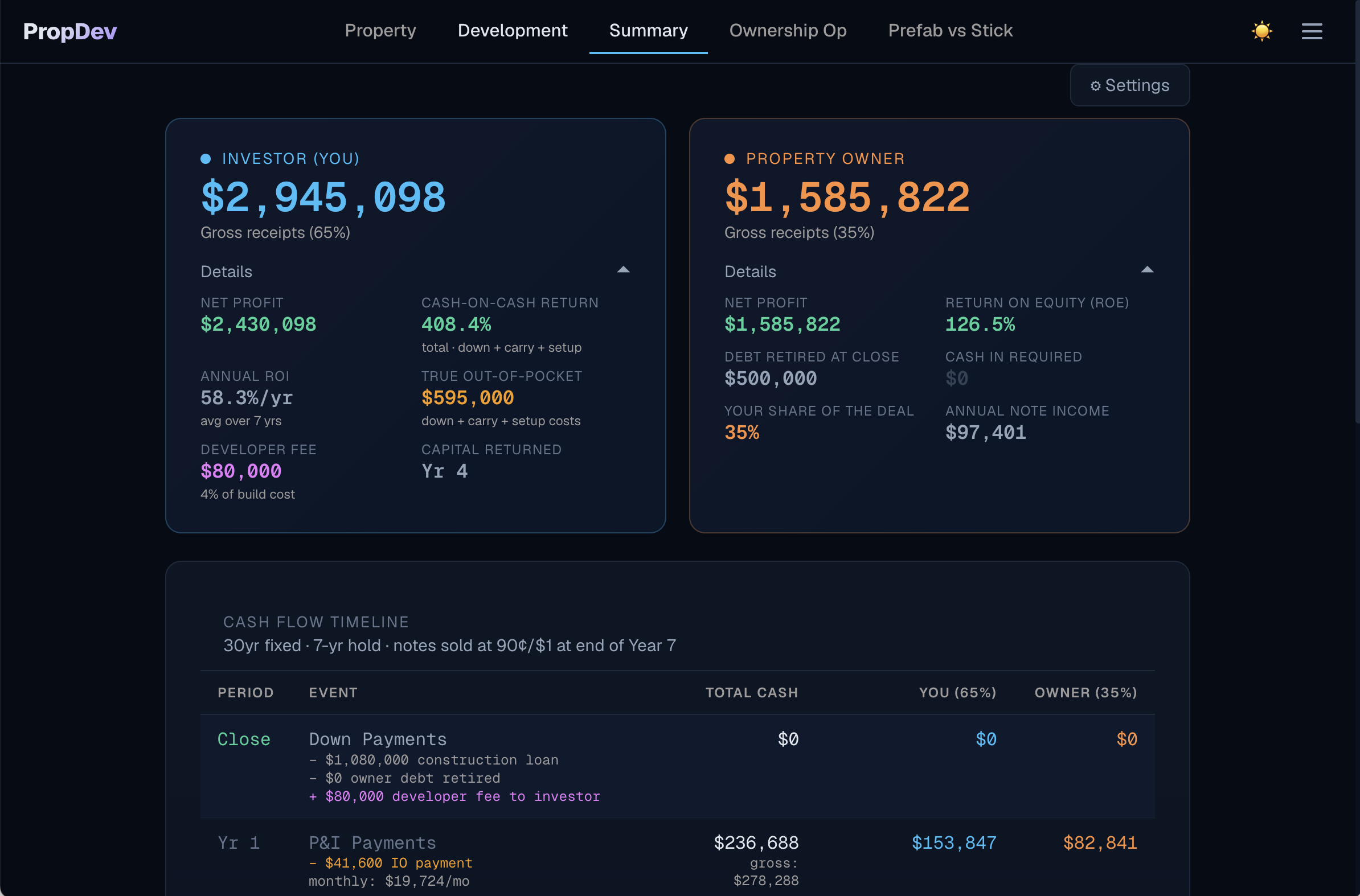
Overview
Over the next decade, Baby Boomers will pass on an estimated $70–90 trillion in assets, much of it locked inside single-family homes. At the same time, younger generations are largely priced out of buying in those same markets. This project partners with aging homeowners to replace their single-family home with a small-footprint, higher-density development — 6–10 modular units in place of one — sold at a price the next generation can actually afford.
The Problem
- →The wealth is real, but it's stuck in real estate. Most Boomer net worth sits in home equity, about to change hands over the next ~10 years.
- →Heirs don't want the house. About 70% of the time, heirs sell an inherited home rather than keep it — they want the value, not the property.
- →The next generation can't buy in. Those same homes are unaffordable at their current single-family price point, in the same neighborhoods.
The result: a huge, predictable wave of aging single-family lots about to hit the market — in exactly the places where housing is least affordable — with no mechanism connecting the two.
Key Insight
The value isn't in the house — it's in the land, and what the land is allowed to become.
One lot that supports a single home today can support 6–10 smaller units instead, priced well below the original home but worth more collectively than one traditional sale. Because the eventual sale or inheritance is predictable (age, location, and asset data are largely knowable in advance), owners can be approached proactively — before the estate sale even happens.
Approach
Identify Target Properties
Aging owners, strong land value, favorable zoning.
Partner with the Owner Pre-Transfer
Offer a better outcome than a traditional sale.
Raise Project-Level Capital
Sized off a detailed, defensible per-unit cost model.
Tear Down and Rebuild at Higher Density
Smaller, efficient, all-electric units, 6–10 per lot.
Sell into the Affordability Gap
Priced below prevailing single-family prices nearby.
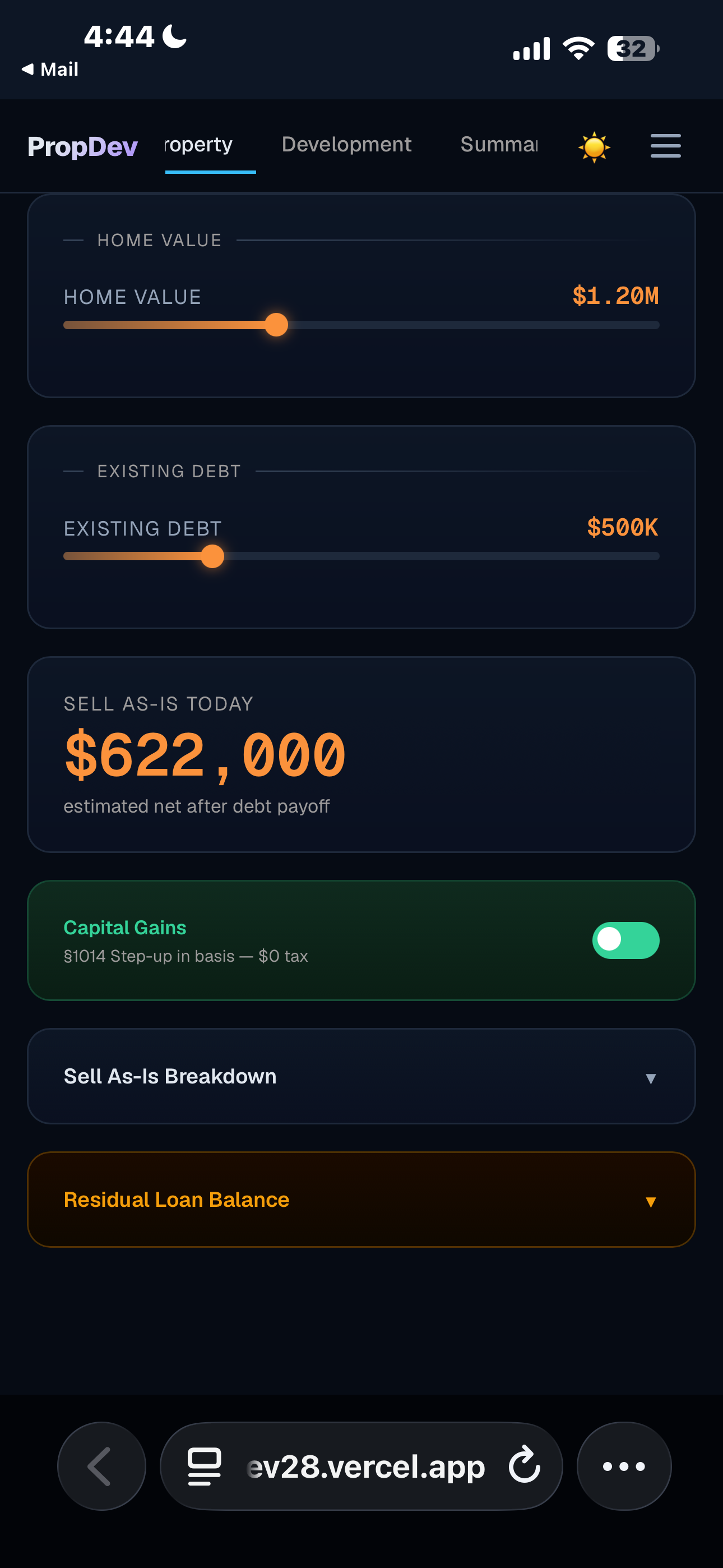
Modeling the Owner's Baseline
Before an owner will consider a different path, the traditional sale has to be on the table for comparison. This screen models that baseline — current home value, existing debt, and the estimated net proceeds from selling as-is today — including the step-up in cost basis that shelters heirs from capital gains tax on an inherited sale.
How the Model Works
At 6–10 units per lot, small per-unit cost swings compound fast — so pricing has to be built bottom-up, system by system, not estimated per square foot. The attached tool shows that approach applied to one system: all-electric mechanical (HVAC + hot water) for a 6-unit building, broken into equipment, distribution, electrical, and labor, with rebates and tax credits layered in to get to a true net cost.
6-unit example (Alameda, CA, 2025–26 pricing)
| System | Project total | Per-unit avg. |
|---|---|---|
| Ducted heat pump HVAC | $74,500 – $174,000 | ~$12,400 – $29,000 |
| Heat pump water heaters | $18,300 – $44,400 | ~$3,050 – $7,400 |
| Net after incentives | ~$86,000 – $201,000 | ~$14,300 – $33,500 |
The same bottom-up approach extends to structure, sitework, and soft costs, so the full per-unit price — and what it takes to hit an affordable sale price — can be defended line by line to capital partners and the owners trusting the model with their land.
Try the Calculator
A working version of the partnership deal calculator — model construction financing, a seller-financed note back to the homeowner, and a traditional-build vs. prefab comparison, across the Property, Development, Summary, and Ownership Op tabs.
Open full screen ↗Why It Matters
Without unit-level cost precision, "replace one house with six" is just an idea. With it, it's a repeatable product: a way to turn illiquid Boomer home equity into housing the next generation can actually buy — with enough margin to fund the next lot.