Yoss / Adecco
Discovery Research for a Freelance Marketplace
Overview
Partnered with YOSS (an Adecco Group company) to define user needs across a two-sided marketplace connecting businesses with independent professionals.
The goal was to uncover how both sides—freelancers and hiring companies—make decisions, and translate those insights into a clearer product direction.
The Problem
The platform lacked a deep understanding of its core users:
- →What freelancers actually need to succeed on the platform
- →How small businesses evaluate and hire talent
- →Which features drive engagement, trust, and repeat usage
- →Without this, product decisions risked being feature-driven rather than need-driven
Key Insight
This is not a single user problem—it's a system of interdependent behaviors.
We uncovered that:
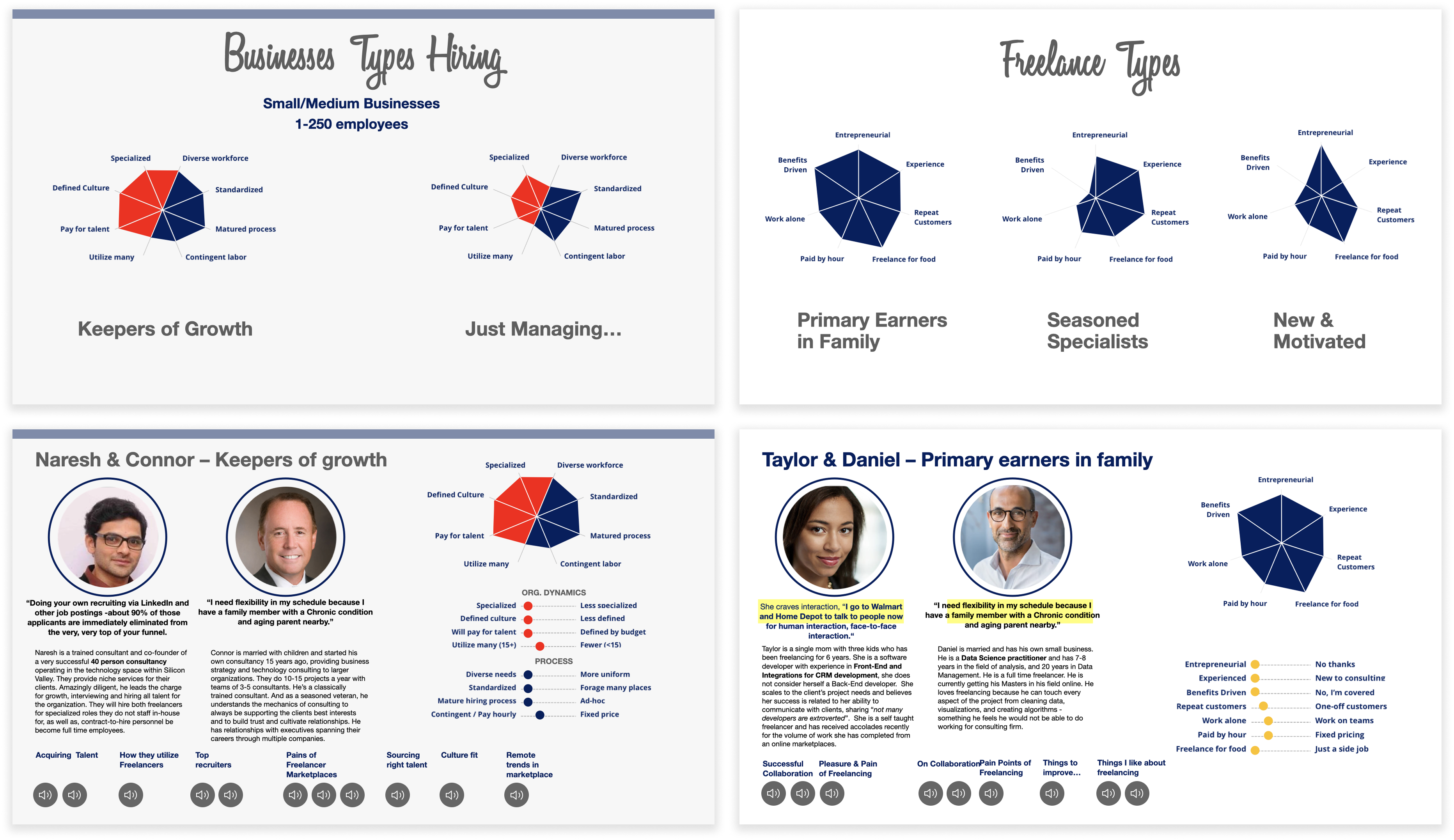
- →Freelancers vary significantly in motivation (primary income vs supplemental)
- →Businesses use two distinct hiring models: short-term transactional and long-term relationship-driven
- →Trust, clarity, and expectations differ across both sides
- →Designing for one side in isolation would break the system
Approach
Research Design
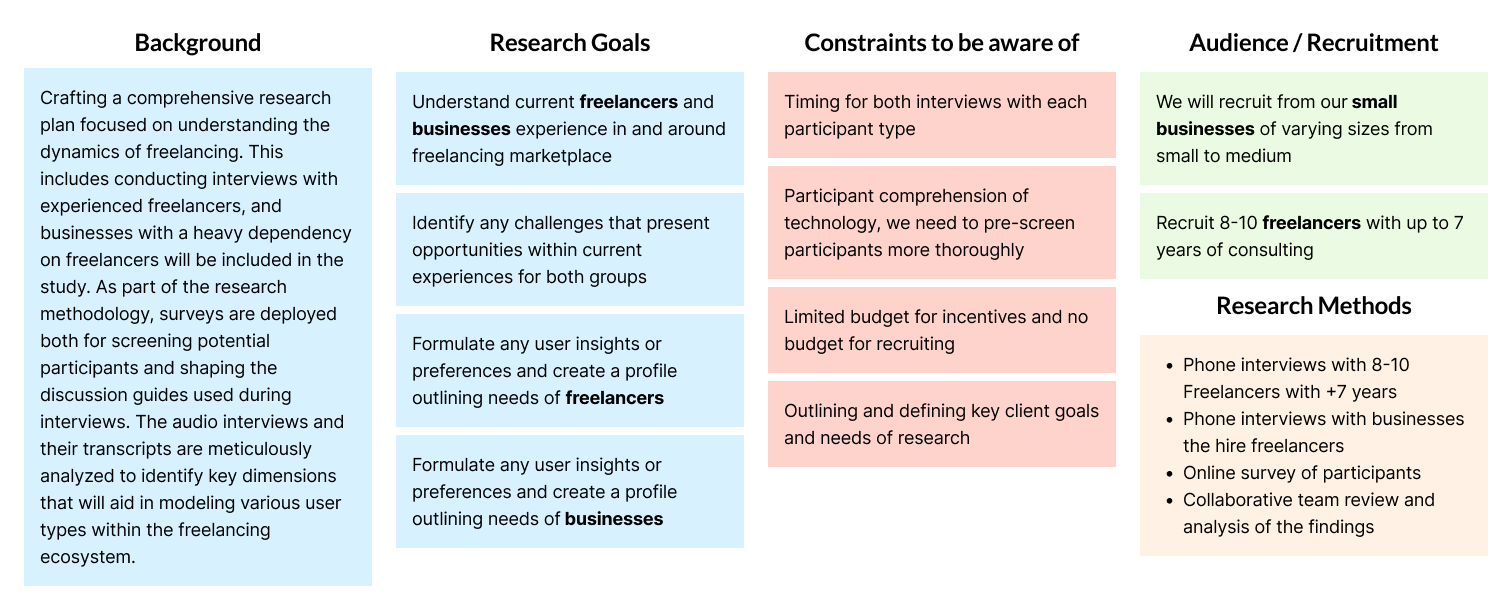
- ·Developed a structured research plan aligned with product goals
- ·Defined participant segments across freelancers and businesses
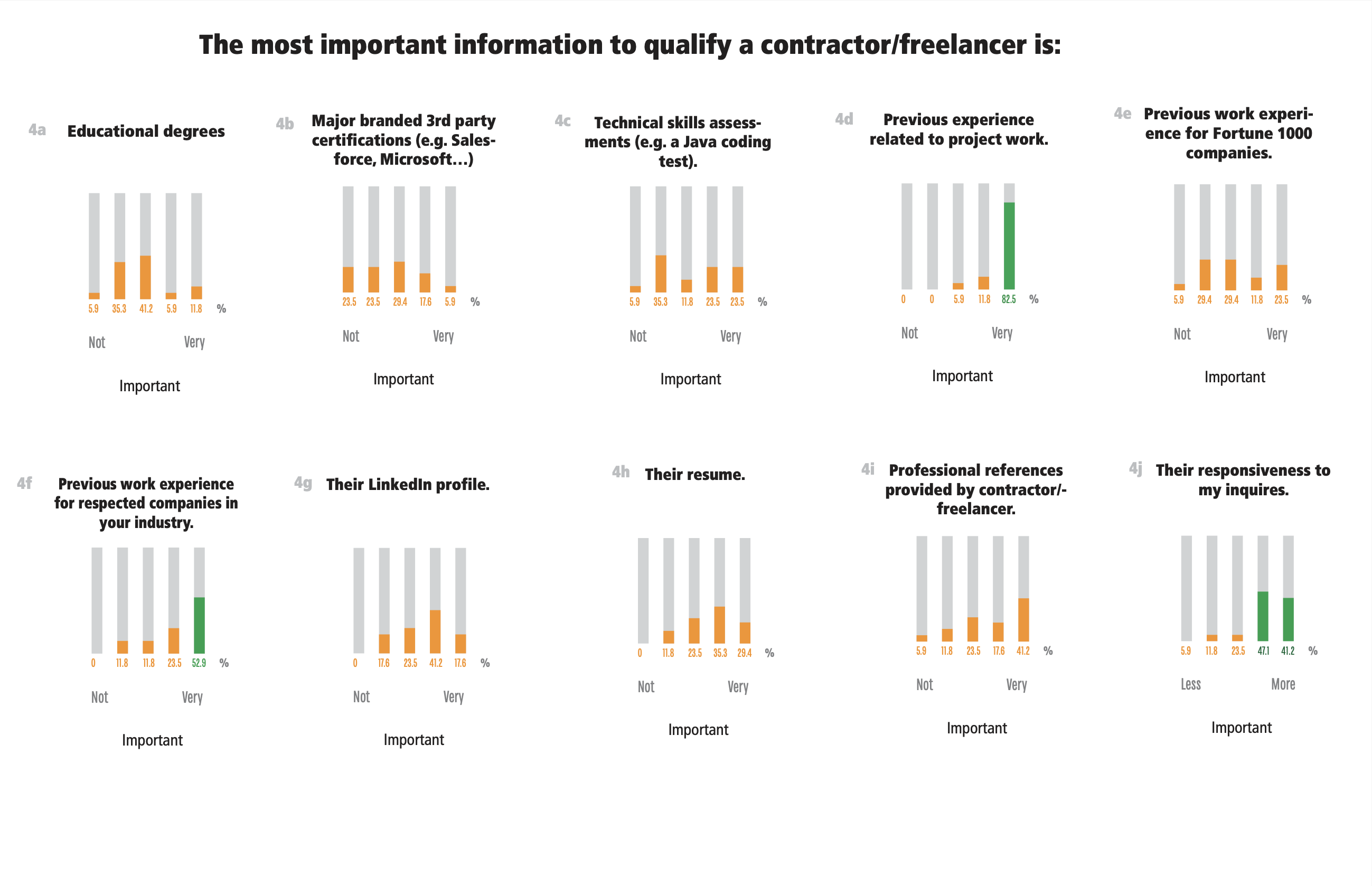
- ·Created screening surveys and interview guides
Qualitative Research
- ·Conducted in-depth interviews with both user groups
- ·Captured behavioral patterns, decision drivers, and pain points
Synthesis + Modeling
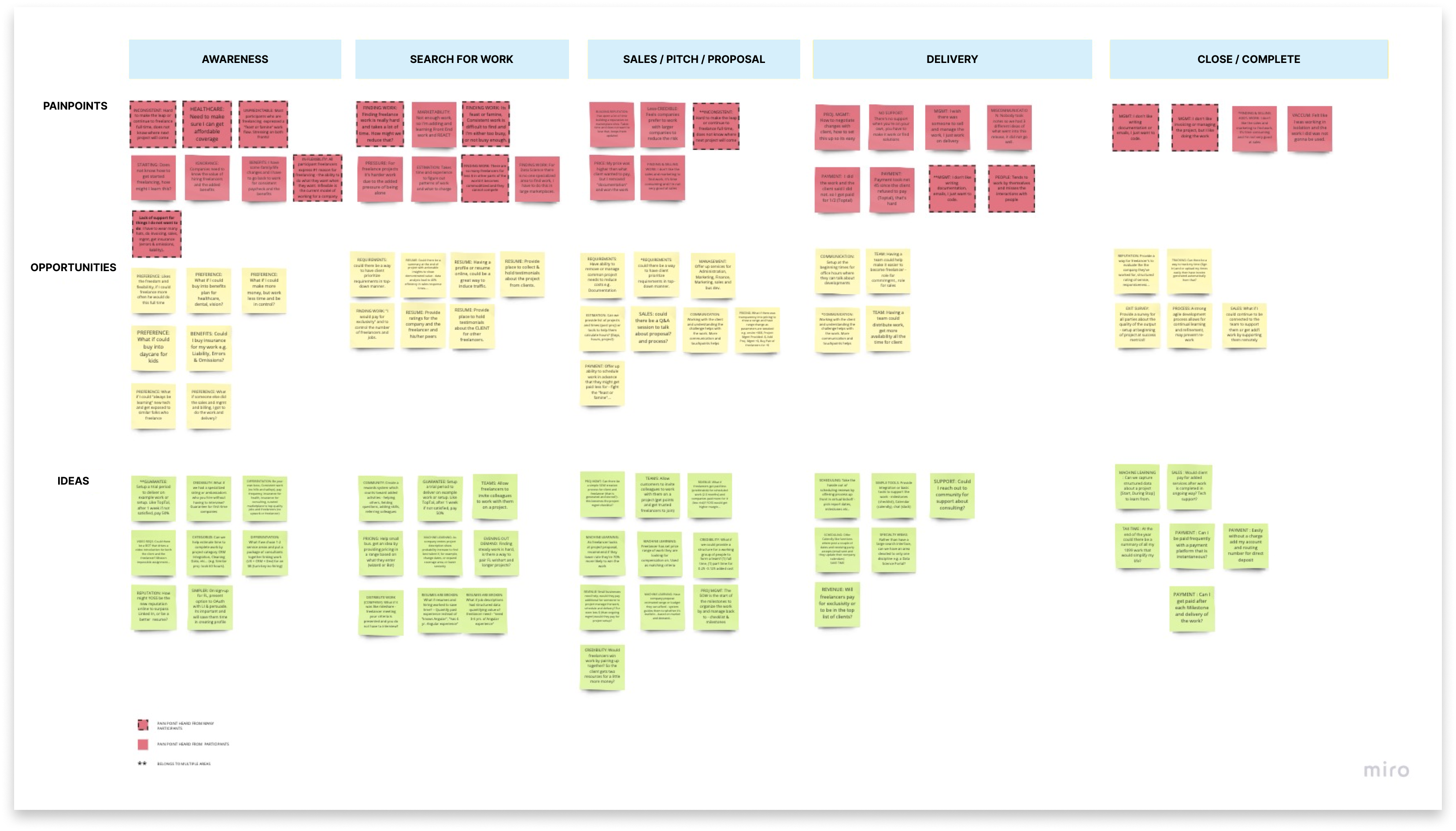
- ·Translated findings into customer journey maps
- ·Identified key moments of friction and opportunity
- ·Developed early user archetypes based on behavior and motivation
System Thinking
The marketplace operates as a dynamic system between two user groups:
We identified two core dynamics — Business Segments: Transactional (speed and cost-driven) vs Strategic (long-term fit and reliability). Freelancer Segments: Primary earners (stability and consistent work) vs Supplemental earners (flexibility and optional income).
Segment Influence
These segments directly shape three product dimensions:
- →Matching logic — how talent is surfaced and ranked
- →Feature prioritization — what to build and for whom
- →Trust and communication models — how expectations are set and maintained
Impact
The research helped the team:
- →Visualize the marketplace as a two-sided system, not a single flow
- →Clarify distinct user segments and their needs
- →Identify where the product needed to differentiate between use cases
- →Lay the foundation for feature prioritization, marketplace design, and future roadmap planning
Key Takeaways
- →Marketplace products require balanced design across both sides
- →User segmentation should be behavior-driven, not demographic
- →Research must translate into clear product implications
- →Early alignment and stakeholder buy-in are critical for impact

User interviews
Synthesis & diagramming
Survey design
Research methods