Amazon
Reducing Returns Through Virtual Try-On
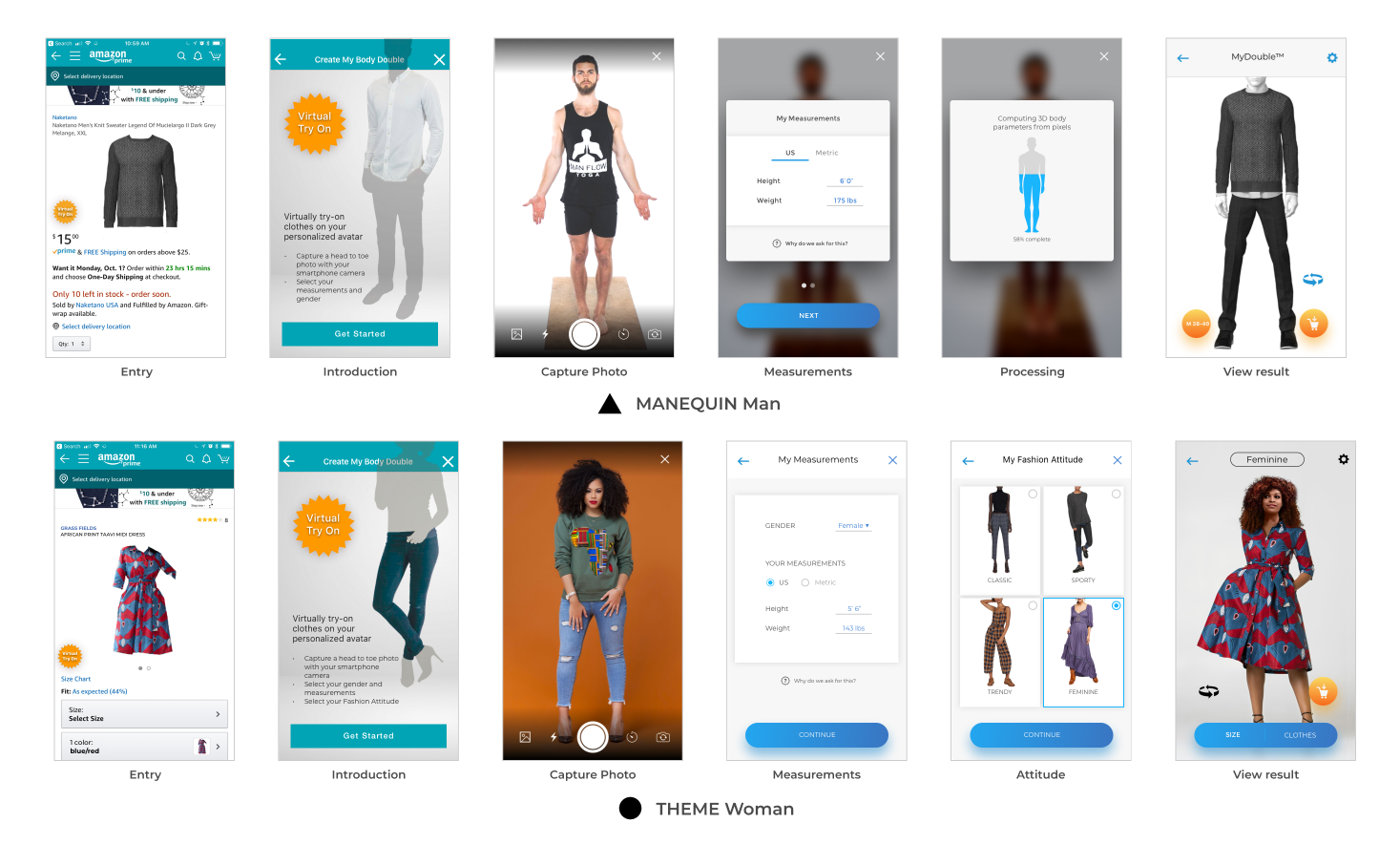
Overview
Partnered with Amazon to explore new product functionality aimed at reducing friction in apparel purchasing and lowering high return rates.
The focus was to design and validate a virtual try-on experience that could replicate—or exceed—the confidence of an in-store fitting room.
The Problem
Online apparel shopping lacks confidence and fit certainty.
- →Customers cannot accurately assess fit, size, or appearance
- →This leads to high return rates and operational cost
- →Existing solutions fail to replicate the in-store fitting experience
- →Setup and onboarding for new tools often introduce friction
Key Insight
Returns are not just a logistics problem—they are a confidence problem.
We found that:
- →Customers need to visualize themselves, not just the product
- →Fit is both functional (size) and emotional (how it looks/feels)
- →Reducing friction in setup is critical for adoption
- →Continuous usage depends on trust in the output, not novelty
Approach
Concept Exploration
Developed multiple experience concepts for in-home evaluation:
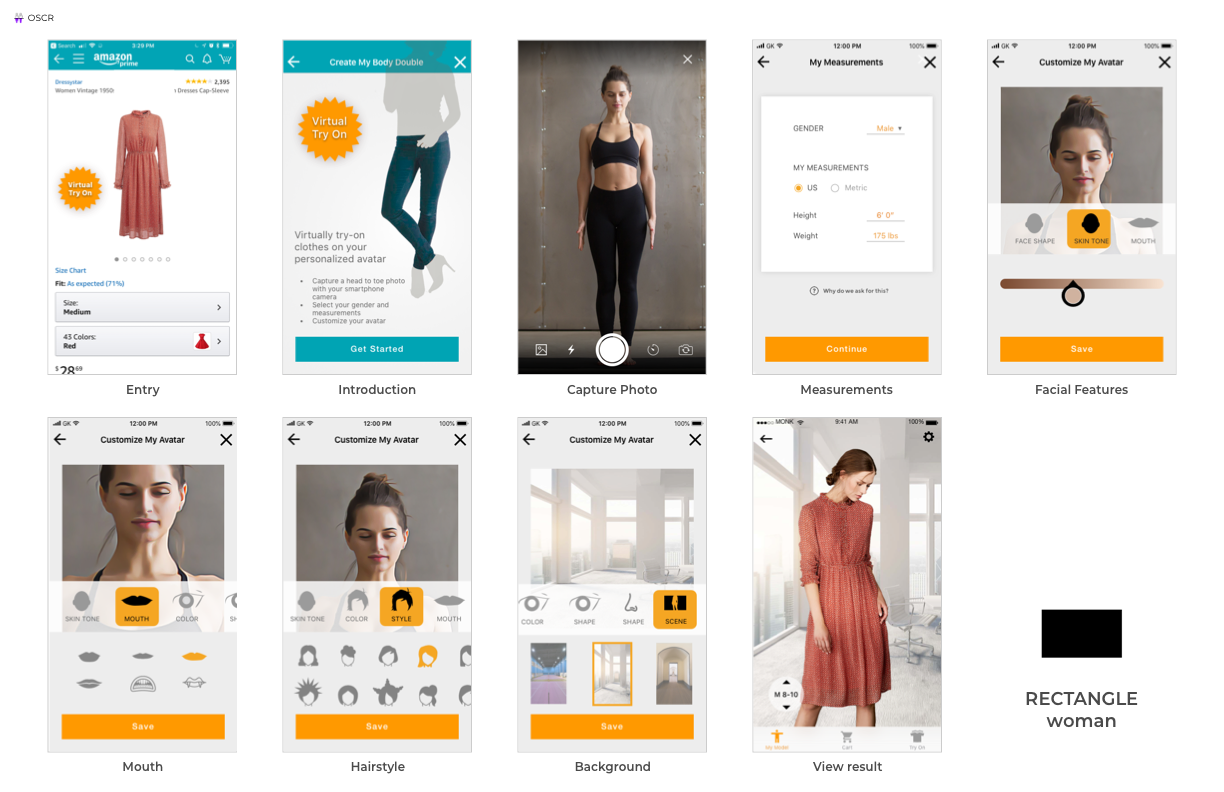
- ·Virtual try-on via mobile and desktop
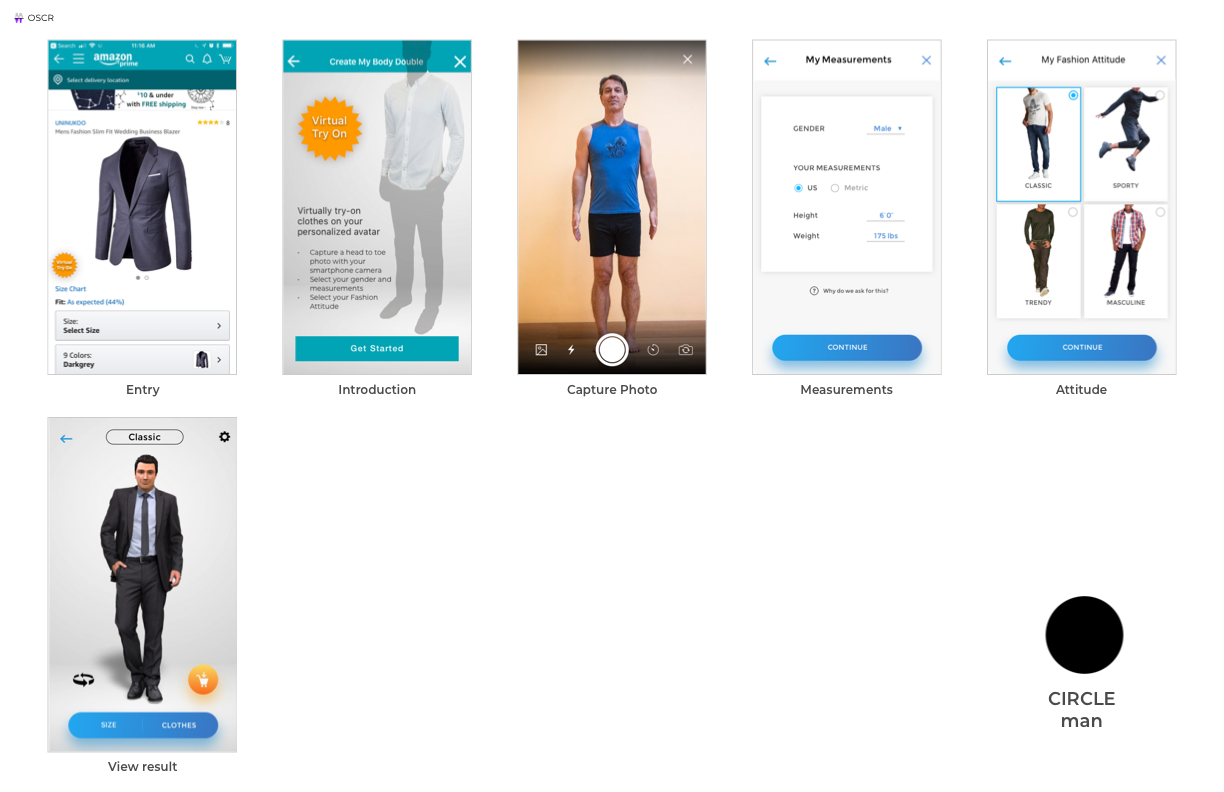
- ·360° visualization of garments on a user body
- ·Fit and style feedback to guide purchase decisions
Proof of Concept (POC)
Created a POC to test feasibility and user response:
- ·Evaluated onboarding and setup flows
- ·Explored tradeoffs between accuracy and usability
- ·Generated alternative interaction models for testing
User Validation
- ·Tested concepts with prospective users
- ·Identified friction points in setup and interaction
- ·Assessed perceived trust and usefulness of the experience
System Thinking
This solution sits within a broader commerce system:
Key Challenge
The key challenge was balancing:
- →Accuracy vs ease of use
- →Setup friction vs long-term value
Impact
The work established a foundation for:
- →Reducing return rates through improved pre-purchase confidence
- →Defining interaction models for virtual try-on experiences
- →Identifying critical factors for adoption (trust, simplicity, speed)
Business Insight
The project also surfaced a critical business finding:
- →The initiative lacked clear ownership and funding within the organization
- →Early discovery clarified misalignment before significant investment
- →Prevented unnecessary allocation of time, resources, and engineering effort
Key Takeaways
- →Confidence is the primary driver of purchase behavior in apparel
- →Reducing onboarding friction is critical for new product adoption
- →Visualization must feel personally relevant to be effective
- →Product success depends on balancing technical capability with usability
- →Early discovery can de-risk product investment and prevent wasted effort
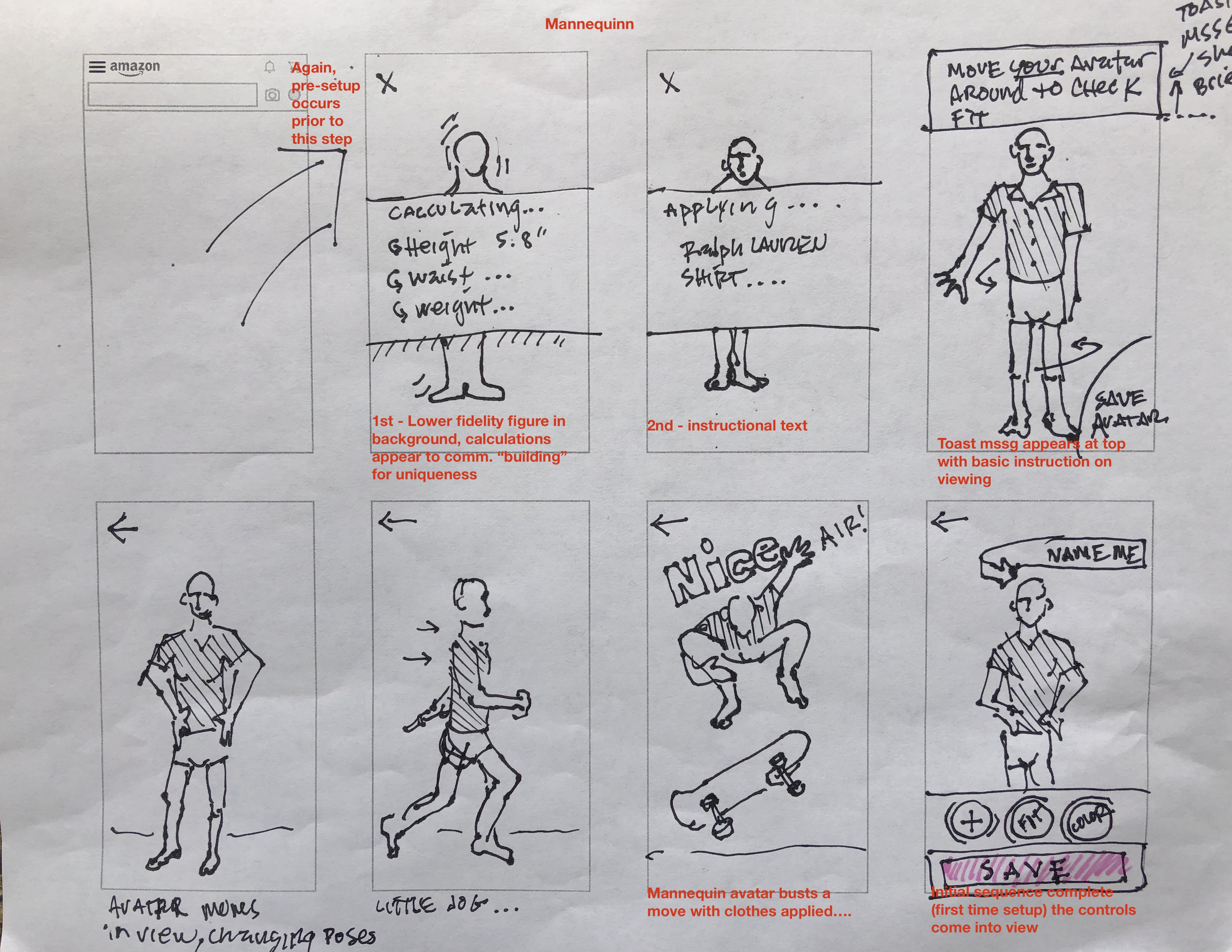
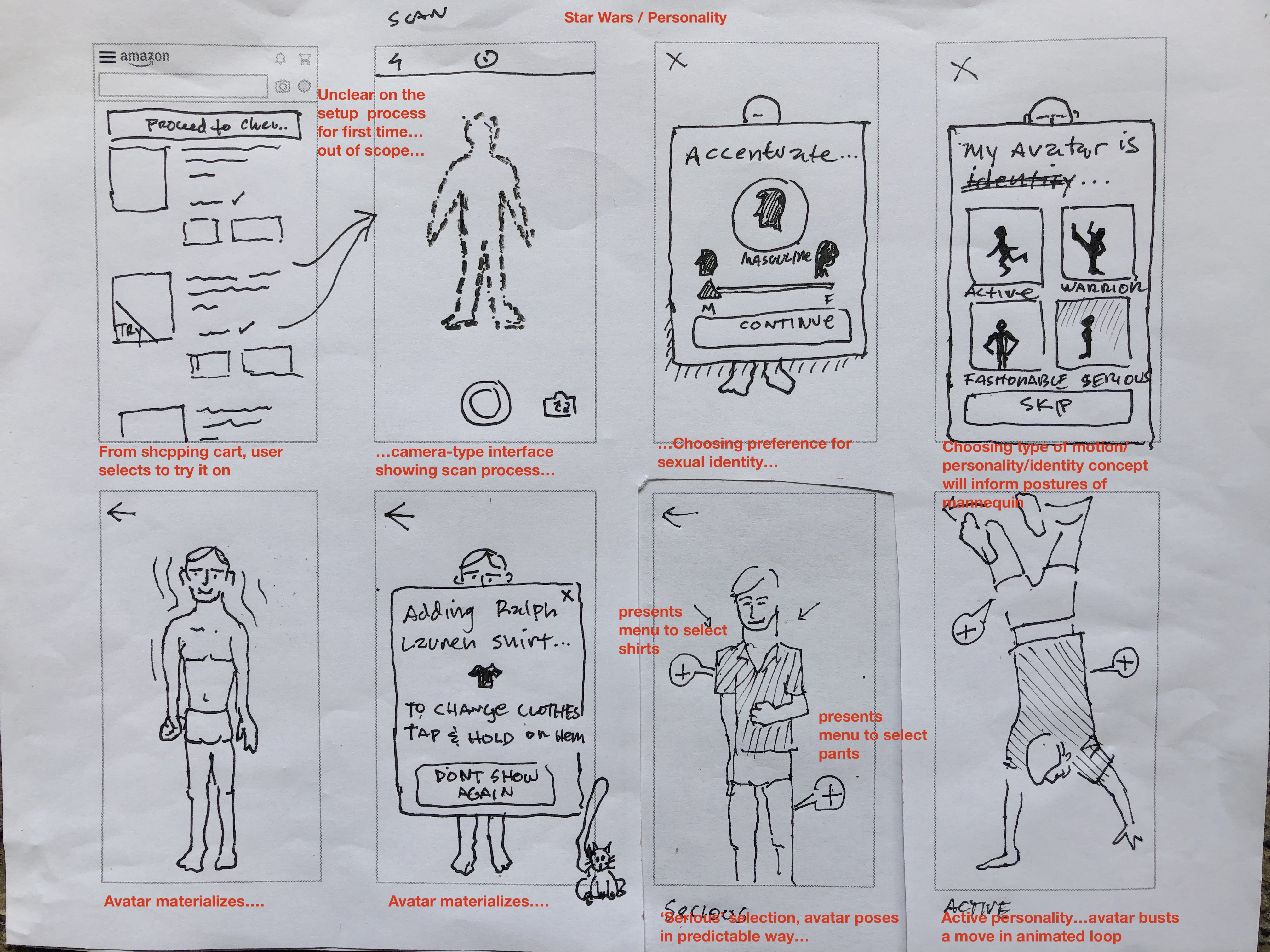
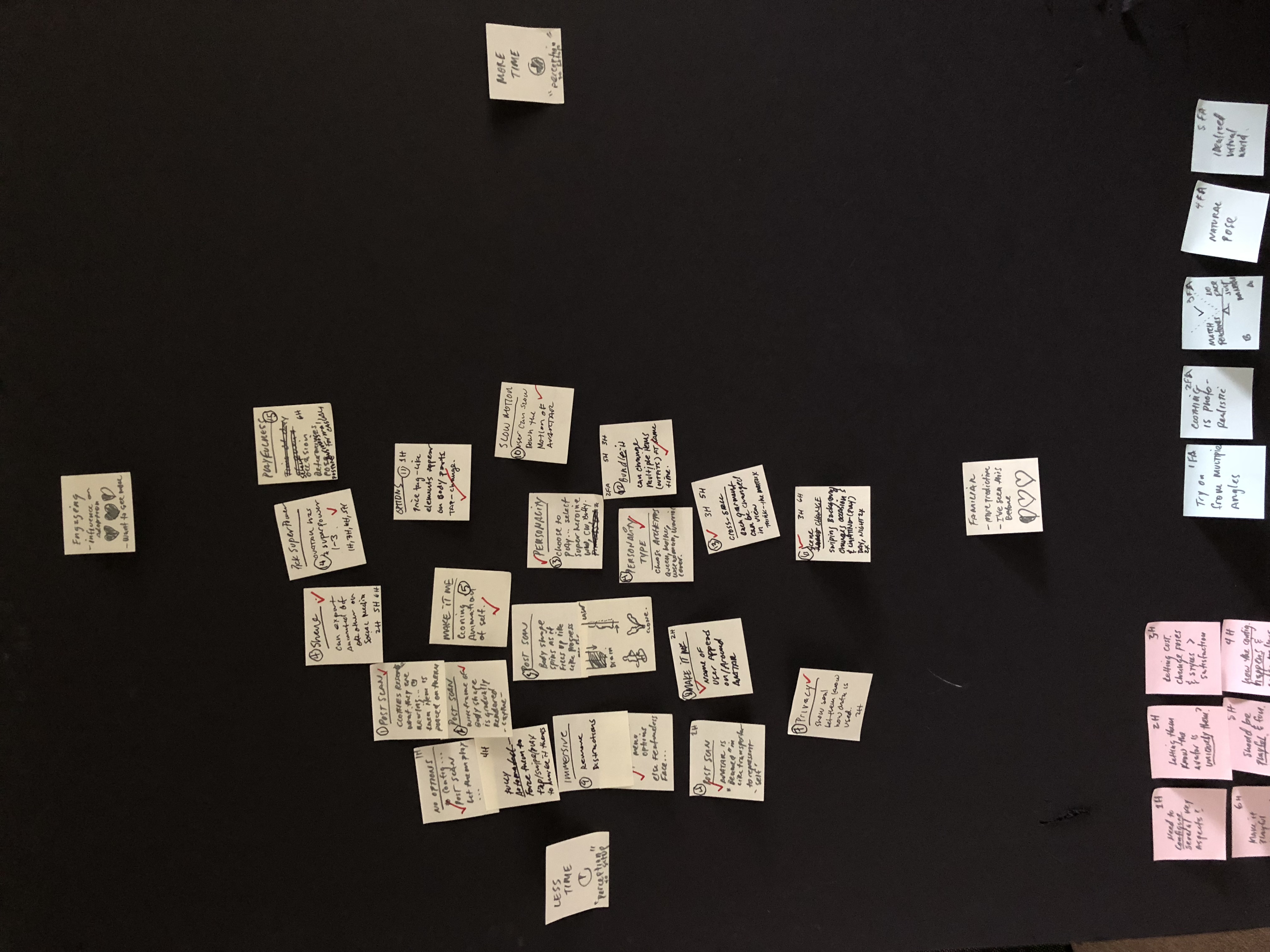
Mapping
Configured view
Rendered view