Get Rent Ready
Get Rent Ready: Using Market Data to Increase Rental Income and Property Value
I developed a data-driven approach to identify rent potential, prioritize property improvements, and measure their financial impact. Applied to a real property, the approach increased rental income by 24%, reduced operating expenses by 4–5%, and increased estimated asset value by 5–6%.
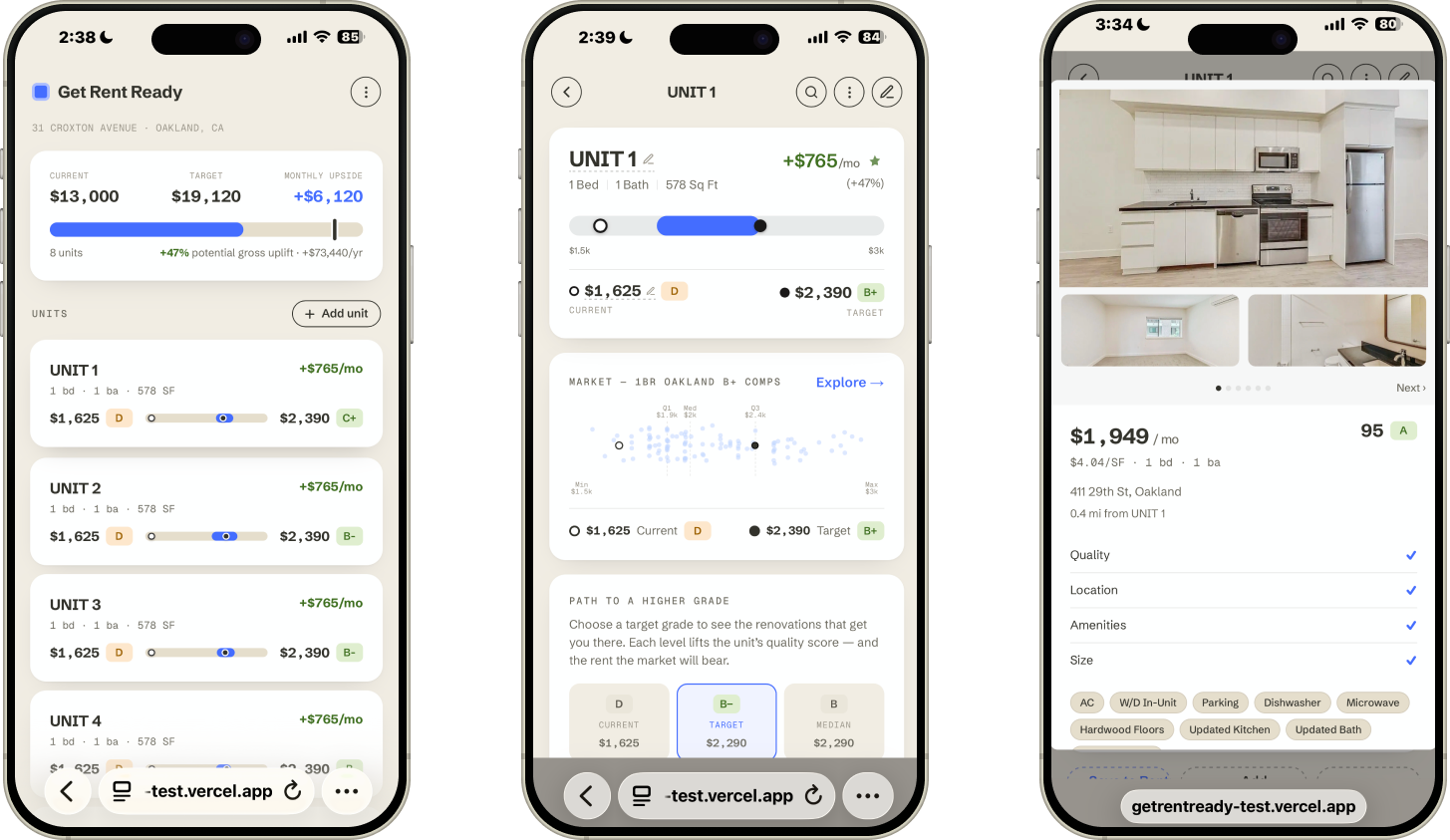
Overview
Real estate investors have access to enormous amounts of market data, but determining what to do with it is much harder.
I identified an opportunity to develop a repeatable method for comparing rental properties to the market, identifying underperformance, and determining where improvements could generate meaningful financial returns.
This led to Get Rent Ready—a data-driven product designed to help investors make clearer, faster decisions about rental performance, property improvements, and where to invest.
Real Property Results
24%
Increase in rental income
5–6%
Increase in estimated asset value
4–5%
Reduction in operating expenses
The Problem
Many rental properties have untapped income and asset value, but owners often lack a clear way to identify where those opportunities exist or how to capture them.
A unit may be renting below its market potential. An improvement may generate additional income. Or capital may be going toward upgrades that produce little financial return.
As a result:
- →Rental income opportunities go unidentified
- →Potential asset value remains unrealized
- →Improvements are made without a clear understanding of ROI
- →Owners lack a consistent way to prioritize where to invest
Key Insight
Investors don't want more data—they want clear direction on what to do next.
Through research and testing, several patterns emerged:
- →Many investment decisions are influenced by agents and property managers, not just owners
- →Users prioritize outcomes—rent, cash flow, and property value—over complex financial models
- →Investors want to understand the financial impact before committing capital
- →Simplicity and clear recommendations drive adoption more than analytical depth
The opportunity was to translate complex market information into a relatively simple question: where can I invest in this property to generate the strongest return?
Approach
We started with real-world property outcomes and worked backward to define the product.
Real-World Testing
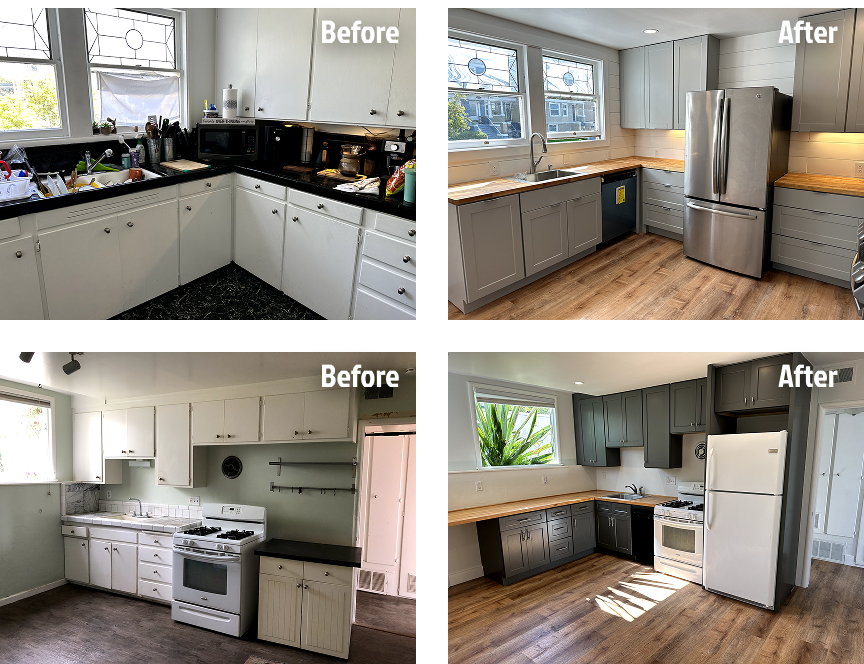
Renovations across multiple units were used to understand and validate:
- ·Rent lift potential
- ·Cost-versus-return thresholds
- ·Which improvements influenced marketability
- ·How the market responded to renovated units
These projects helped establish the financial framework behind the product.
Market + Data Analysis
I built datasets of comparable rental listings and analyzed the relationship between apartment characteristics, condition, amenities, location, and asking rent.
This allowed us to benchmark individual units against the market rather than relying primarily on intuition or broad rent averages.
Concept Iteration
Early concepts explored broader asset-management tools, but testing showed limited traction.
A second direction focused much more specifically on cash flow and rent optimization. Users responded more strongly when the product connected market information directly to a financial opportunity — shifting it from a collection of property-management tools toward a decision-support platform for real estate investment.
Product Direction
The resulting product was designed to:
- ·Benchmark current rents against comparable properties
- ·Identify potential rent opportunities
- ·Show what characteristics are driving higher rents
- ·Estimate the financial impact of improvements
- ·Help investors prioritize where to deploy capital
The Product
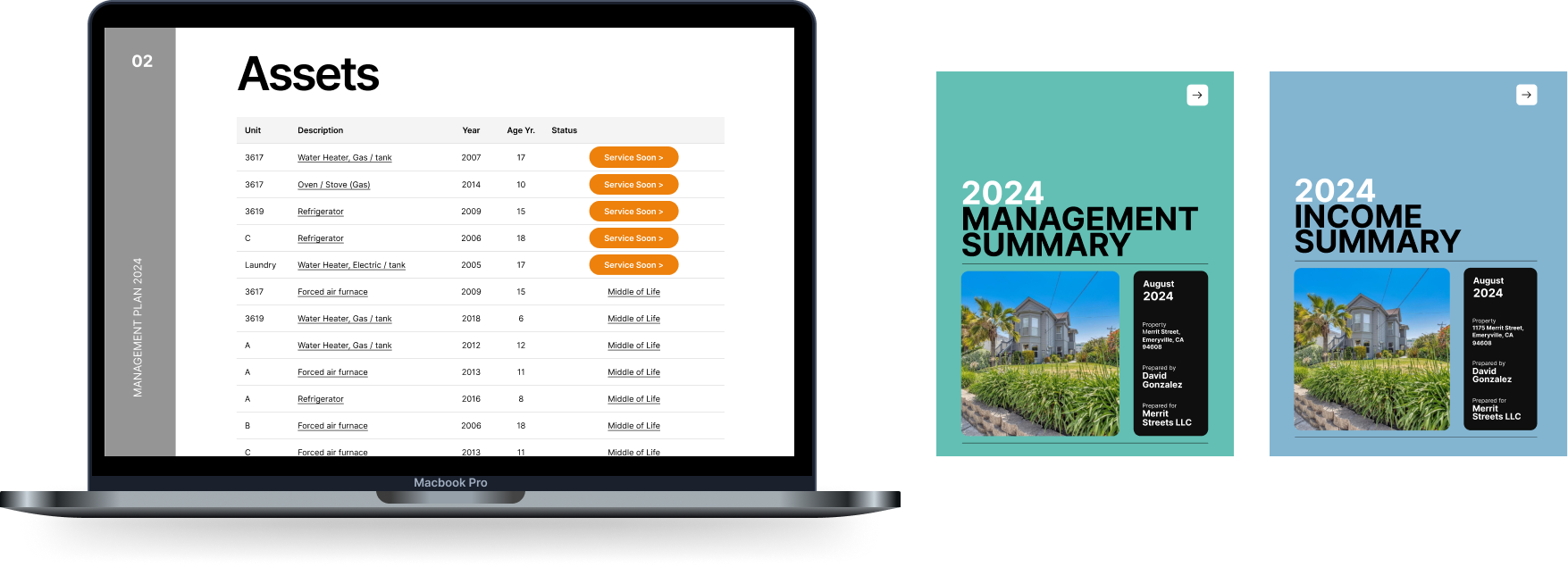
Get Rent Ready gives investors a unit-level view of property performance.
Current rent is benchmarked against comparable nearby apartments, allowing an owner to see where the unit sits within the market and how its condition, amenities, size, and location compare with higher-performing properties.
From there, the product identifies potential improvements and helps connect those decisions to rent potential, cash flow, and estimated property value.
The goal is not simply to tell an investor what an apartment could rent for. It's to help answer why—and what they can do about it.
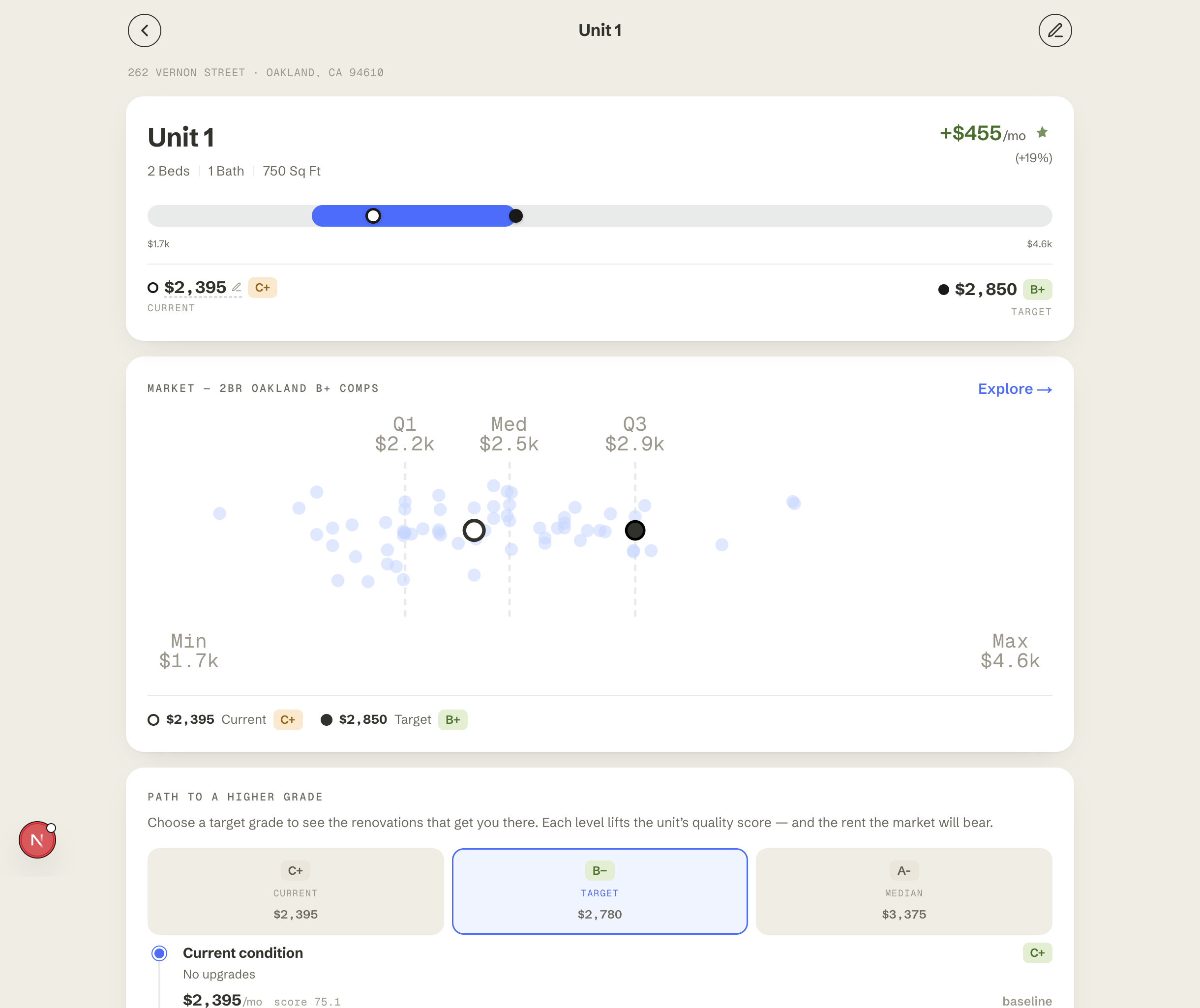
How the Model Works
Get Rent Ready uses market data to understand how apartment characteristics relate to rental value.
Decision Model
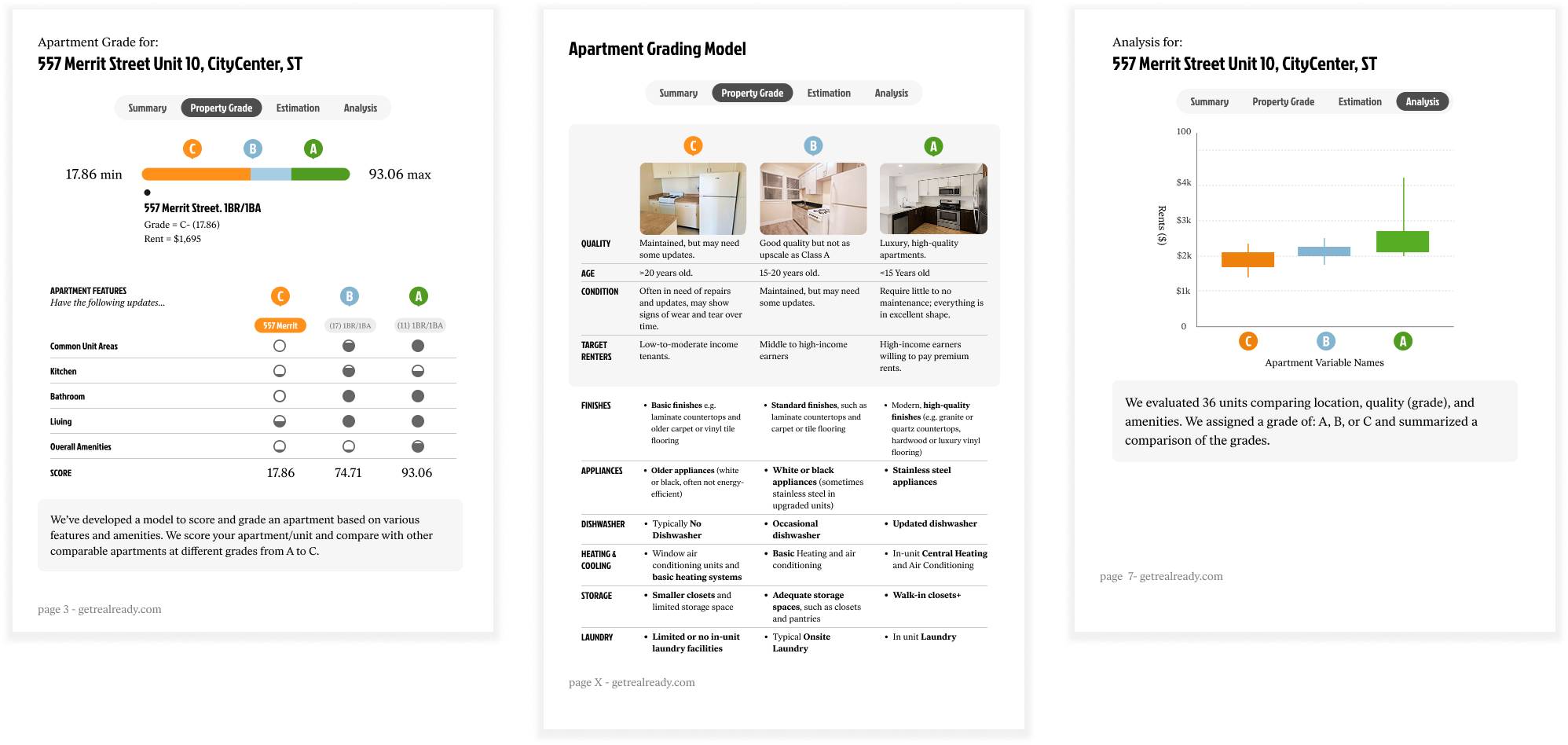
Phase 2
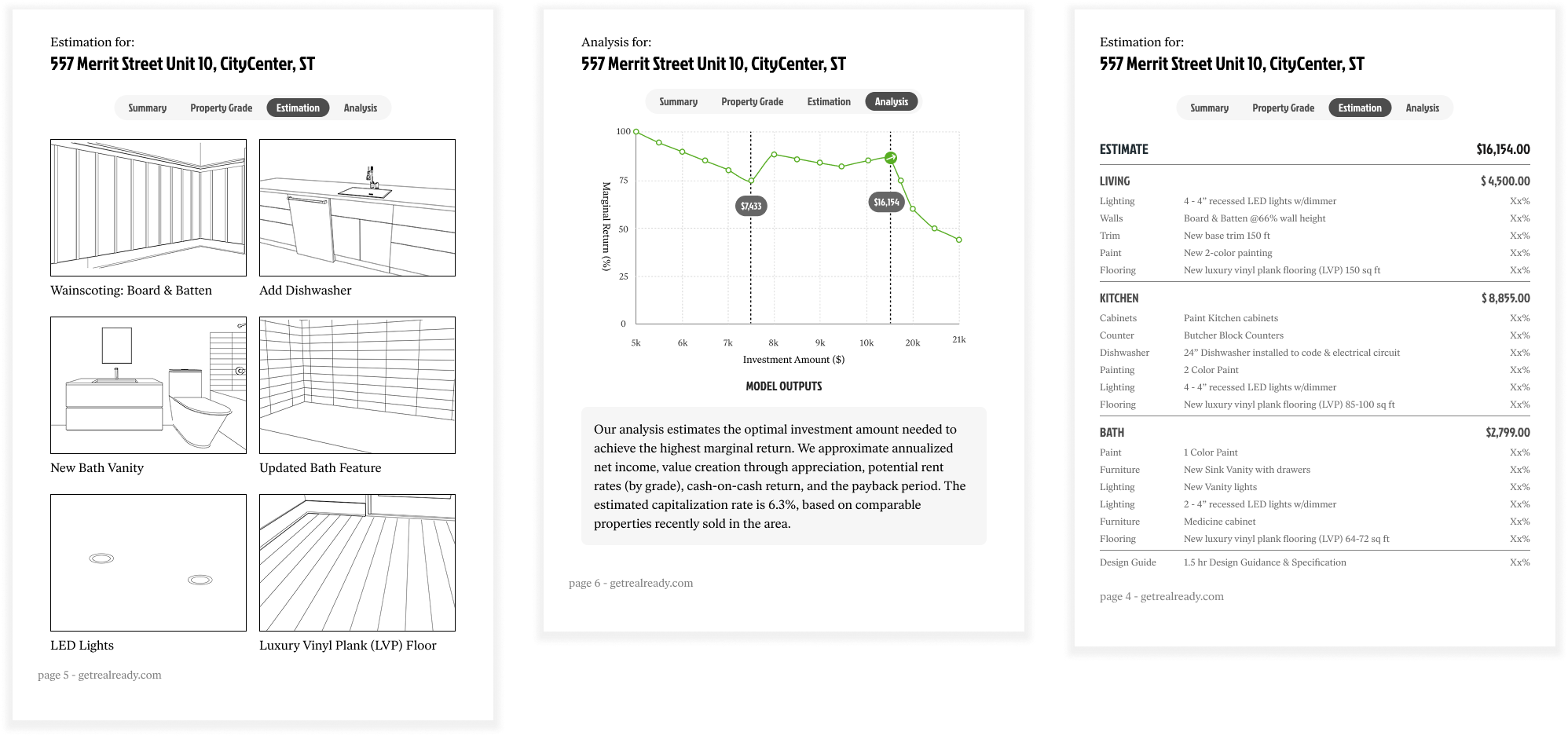
Phase 3
Concepts
Prototype